In the highly competitive printing and packaging market, the final presentation of printed products directly affects product value and customer impression. Surface varnish, as a key element in enhancing the grade of printed products and improving protective performance, is of vital importance in terms of quality. Kangly Chemical understands this well and has launched a high-performance printing emulsion—LA-6162A—aimed at providing reliable and efficient material solutions for varnish formulation design and printing production.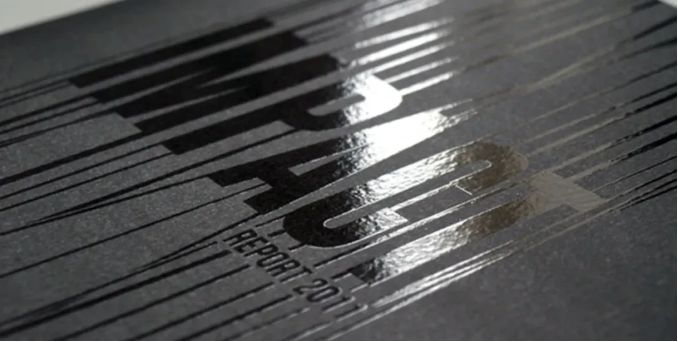
Product Description
LA-6162A is a modified self-crosslinking acrylic copolymer film-forming emulsion, specially designed for waterborne varnishes and waterborne inks requiring high anti-blocking performance (oil-to-oil surface). Waterborne varnishes and waterborne inks prepared with this product exhibit no surface tackiness after high-temperature treatment (180–200°C), and the printed products have certain anti-slip properties, excellent abrasion resistance, and anti-blocking performance. It provides excellent adhesion to metallized layers and packaging films (PE, PET, OPP, PVC). This product has broad compatibility and can be used together with other acrylic polymers commonly available on the market.
Technical Parameters
|
|
|
|
|
|
|
|
|
|
|
|
|
|
|
|
|
|
|
|
|
|
|
|
Product Characteristics
-
High-temperature resistance
The product can withstand instantaneous high temperatures of 180–200°C, with no surface tackiness after treatment, maintaining structural stability. -
Anti-slip
Excellent anti-slip performance, providing a relatively high surface friction coefficient. -
Abrasion resistance
Good abrasion resistance and strong resistance to scratching and wear, protecting surface integrity.
Product Applications
Suitable for formulating preprint high-temperature-resistant waterborne varnishes, high anti-blocking waterborne varnishes, preprint waterborne inks, flexographic and gravure surface-printing waterborne plastic inks, waterborne blister basecoats, waterborne clearcoats, waterborne coatings, etc.
After LA-6162A was formulated into a varnish according to the established formula and blade-coated onto test cardstock, the following tests were conducted:
High-Temperature Resistance Test
The cardstock specimen coated with the test varnish was placed under a hot-pressing platform set at 200°C (±2°C), with standard pressure applied and a constant-temperature contact time of 3 s (±0.5 s).
√ Test result: After the specimen was removed and cooled, visual and tactile inspection showed no adhesion on the coating surface, and no delamination or blistering (layer difference phenomenon) occurred on the cardstock substrate. The coating appearance remained intact, indicating good thermal stability and anti-blocking properties under instantaneous high temperature.
Abrasion Resistance Test
A standard abrasion tester was used to perform 500 reciprocating friction cycles on the surface of the cardstock specimen coated with the test varnish.
√ Test result: After the test, no obvious color transfer (staining) was detected on the surface of the friction medium. Observation showed no visible scratches or wear marks on the varnish coating surface of the specimen.
Anti-Slip Performance Test
The cardstock specimen coated with the test varnish was fixed on a test platform with an adjustable inclination angle. A standard test slider was placed on the specimen surface. The platform inclination angle was slowly increased at a constant rate until the slider overcame static friction and began to slide. An inclinometer was used to record the platform inclination angle at the instant the slider initially slid.
√ Test result: After multiple repeated tests and averaging, the maximum static friction angle of the varnish coating surface was measured as 24.5°. This data indicates that the coating has excellent surface anti-slip performance.
Conclusion
Based on the above three key performance tests, the varnish coating showed excellent performance in high-temperature resistance (200°C/3 s), abrasion resistance (500 reciprocating friction cycles), and anti-slip performance (maximum static friction angle 24.5°), meeting the requirements of relevant applications for coating durability, appearance retention, and safety.